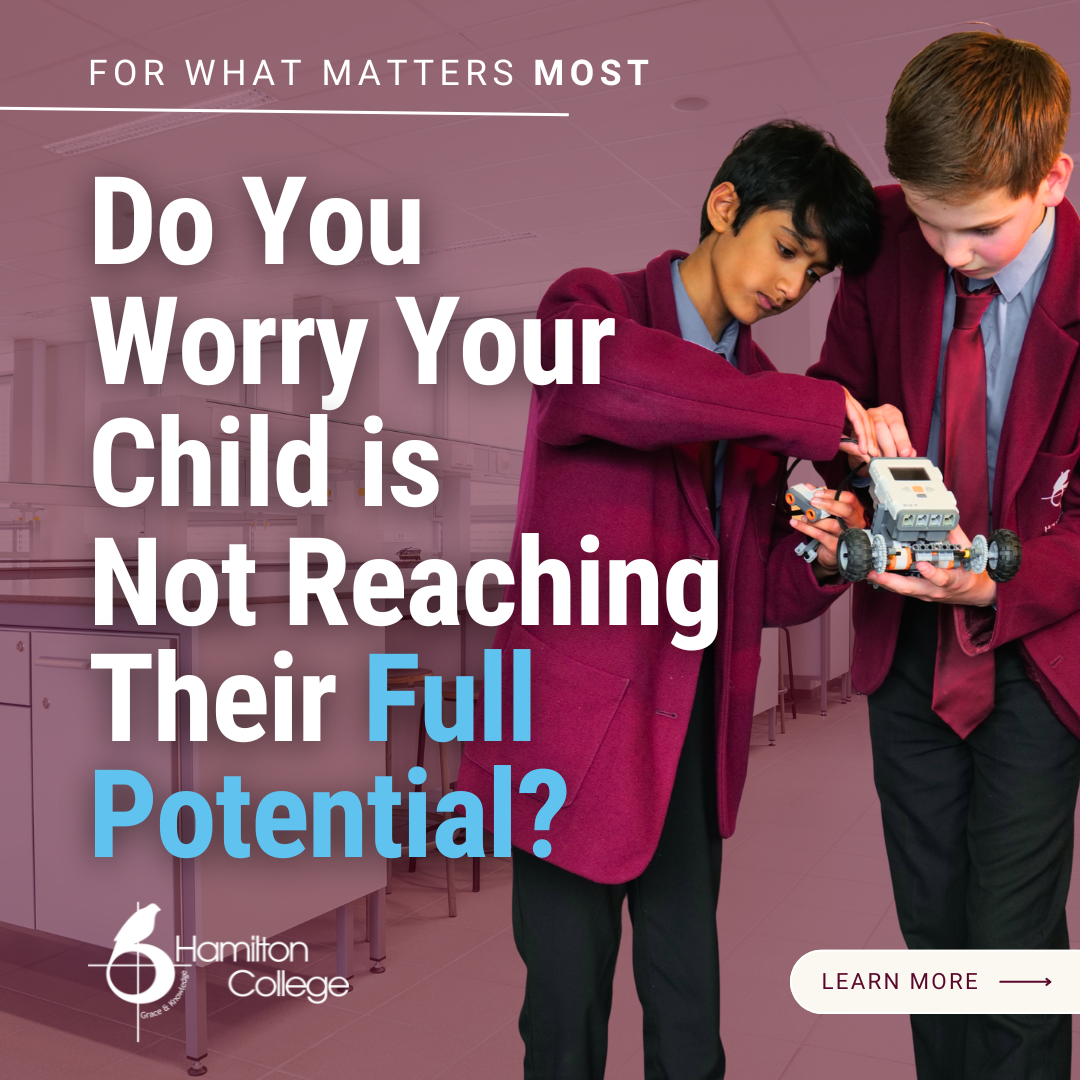

Do You Worry Your Child is Not Reaching Their Full Potential?
For many parents, this question doesn’t arrive loudly.
It can sit quietly in the background during parents’ evenings, when homework feels too easy or too hard, or when a child seems capable of more but isn’t interested or engaged.
For most families, the concern isn’t ability. It’s whether their child is really being seen, supported and challenged.
You’re not alone.
Research shows that 64% of parents worry their child isn’t reaching their full potential
- Talker Research (2024)
Parents know their children well. They sense when something more is possible or when confidence, challenge or opportunity could unlock further growth. And often, the missing piece isn’t effort or intelligence. It’s environment.
Potential doesn’t emerge automatically
Children do not reach their potential simply because they are bright, motivated, or well-behaved. Potential develops when learning is shaped around the individual and when they feel secure enough to stretch themselves and supported enough to take risks.
Educational research consistently shows that pupils make stronger progress when they are known as individuals, rather than being assessed or grouped (OECD, 2018). When a child feels anonymous or overlooked, learning can plateau. Confidence dips. Engagement fades. And potential is blocked.
Lost in the crowd? Not here.
Children make stronger progress when they are recognised as individuals. At Hamilton College, learning is personal by design because every child deserves to be known.
Being known means more than remembering a name or tracking attainment. Our teachers and Pastoral Team understand how a child learns, what motivates them, where they feel confident and where they may hesitate. It means we notice small changes before they become barriers. It means providing a variety of opportunities, in and beyond the classroom, for pupils to discover where they excel. Through a wide co-curricular programme, pupils can shine in different ways and build confidence through success, and achievement is recognised and celebrated.
Being known changes how children learn
Our ethos shapes daily life at Hamilton College. It’s reflected in:
- small class sizes that allow genuine interaction
- strong teacher–pupil relationships
- consistent pastoral care that supports readiness to learn
- close relationships with families
- pupil voice and leadership opportunities
- continuity through transitions
- varied opportunities beyond the classroom
When children feel recognised and understood, they are more willing to take risks in their learning. When pupils feel safe to try and also safe to fail, learning deepens. Confidence develops. Progress becomes sustainable rather than fragile. And the opportunity to reach potential grows.
The right conditions make the difference
High engagement at Hamilton College isn’t a coincidence. Wellbeing and personal pathways are built into our culture.
The impact of this approach is clear in our internal data:
- 95% of pupils say they like school
- 97% feel comfortable approaching staff with questions or suggestions
- 99% say they are proud of their schoolwork
These outcomes don’t happen by chance. They reflect an environment where children feel known, supported and challenged. Not lost in the crowd.
What happens when children feel known
One new parent recently shared:
I feel the staff are able to get to know the pupils and identify individual pupils’ strengths, supporting them in reaching their full potential.
Reaching potential is rarely about pushing children harder.
It’s about removing uncertainty, disconnection, and the feeling of being unseen, and replacing them with clarity, encouragement, and opportunity.
Sometimes, the difference isn’t what children are capable of but the conditions they are growing in.
If you find yourself wondering whether your child is truly being supported to reach their potential, we invite you to experience Hamilton College for yourself at our Open Day on Wednesday, 11 February. Book now to explore the difference this environment could make.
.png)











.jpg&command_2=resize&height_2=85 "From the Desk of the Headteacher - 2024/25 - Issue 3")